Polysilicon
To make silicon pure enough, you turn it into a gas and let it grow back.
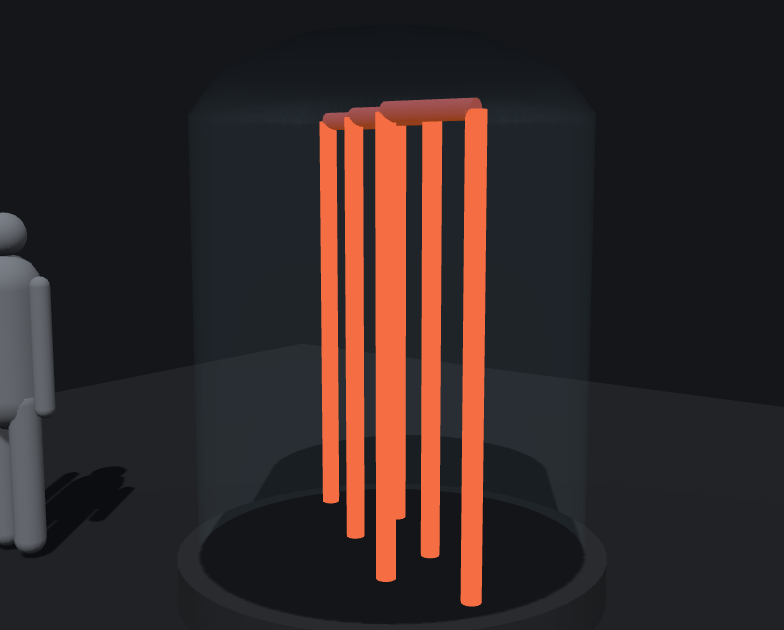
To make silicon pure enough, you turn it into a gas and let it grow back onto heated rods. Raw silicon is combined with hydrogen chloride to give a gas, trichlorosilane, which is distilled until almost every impurity is driven out. That gas enters a bell where silicon rods are electrically heated to 1,000 to 1,100 °C: silicon deposits on them, atom by atom, and the rods thicken for days. The result is polysilicon, 99.999999999% pure, barely one foreign atom in a hundred billion. The main electronic-grade producers are in Germany, the United States, Japan and Korea. But across all uses, China makes 93.5% of the world's polysilicon, mostly for solar panels.
Sources
- 1,000 to 1,100 °C Polycrystalline silicon rod and method for producing polysilicon (US 9,446,957 B2), Wacker Chemie AG, brevet, retrieved 11 October 2026.
- ≈ 99.999999999% A silicon purity of 12N only exists in the world of marketers, Bernreuter Research, retrieved 11 October 2026.